Political Model of the Sikhs
15-Jun-2023
Political philosophy of the Sikhs is Libertarian Capitalism
Direct democracy of concerned and impacted citizens
Sarbat Khalsa is their well-established and functioning model of direct democracy
Epistocracy: governance by experts, Khalsa as governors
Khalsa trained in benevolence, governance, economics, history, politics
Direct democracy of concerned and impacted citizens
Sarbat Khalsa is their well-established and functioning model of direct democracy
Epistocracy: governance by experts, Khalsa as governors
Khalsa trained in benevolence, governance, economics, history, politics
Sikhs Political Model is for a Sikh Kingdom based on traditional institutions of decision making.
We will break down this statement and elaborate on it.
The word of the 'King' - the eternal Guru Granth Sahib has highest priority over all matters under his domain - both spiritual and temporal (worldly).
Most countries that claim to be democratic practice majoritarianism where the most easily misguided bottom 51% elect narcissitc dangerous fools that serve their corporate masters. Inflation, exploitation, and fascism follows from this satanic union of the Two Towers - the government (politicians and bureaucrats), and large corporations and oligarchs.
Hamid Dabashi, Professor of Iranian Studies and Comparative Literature at Columbia University, said: "All these states stage a ludicrous spectacle they call elections, then agitate the basest populist, nativist, or xenophobic fears and fantasies of the mobs they control and call the result democracy" - Source
Democracy is very expensive. "A precondition for an honest government is that candidates must not need large sums of money to get elected, or it must trigger off the cycle of corruption. The bane of most countries in Asia has been the high cost of elections. Having spent a lot to get elected, winners must recover their costs and also accumulate funds for the next election. The system is self-perpetuating. In Thailand, a former government minister described it as 'commercial democracy, the purchased mandate'." (Lee Kuan Yew, 'From Third World to First, The Singapore Story', p. 164).
"Plato argues that democracy is inferior to various forms of monarchy, aristocracy and even oligarchy on the grounds that democracy tends to undermine the expertise necessary to the proper governance of societies (Plato 1974, Book VI).
Most people do not have the kinds of intellectual talents that enable them to think well about the difficult issues that politics involves. But in order to win office or get a piece of legislation passed, politicians must appeal to these people's sense of what is right or not right. Hence, the state will be guided by very poorly worked out ideas that experts in manipulation and mass appeal use to help themselves win office" - Source .
Sikhs have their own traditional systems of decision making similar to direct democracy.
The advantage of this approach is that: it does not allow decisions to be made by distant authorities; it does not allow closed door decisions; it does not allow a majority to make decisions against the minority; and it does not allow truly bad decisions as people would revolt right there on the spot.
Five people(ਪੰਜ ਪਿਆਰੇ) are also chosen to implement the decisions. These are people who have the necessary knowledge, skills and experience to implement this. These are the meritocratic philosopher-kings that the public trusts to implement the decisions.
The advantage of this approach is that: the Chosen Five (ਪੰਜ ਪਿਆਰੇ) are chosen for their knowledge, skills and experience; people choose them and so people fully support them; they are chosen for the particular task, they do not hold any permanent positions. There is no concept of democracy electing entertaining clowns with limitless powers over all matters for years.
Khalsa are the meritocratic experts in governance of the Sikhs. This is a 325 year old tradition that is still in active use. Khalsa are men trained in benevolence, governance, politics, economics and more.
People: Khalsa (Philosopher-Kings)
Processes: Sarbat Khalsa (ਸਰਬੱਤ ਦਾ ਭਲਾ) - all of Khalsa, Chosen Five (ਪੰਜ ਪਿਆਰੇ)
Tools: finest horses, swords made from Wootz Steel, weapons - all appropriate for that time
The zenith of this model was the Sikh Kingdom of Banda Singh Bahadur (1710-15) and Maharaja Ranjit Singh (1799-49). Both these kingdoms are known for providing good governance, prosperity, and freedom from government tyranny.
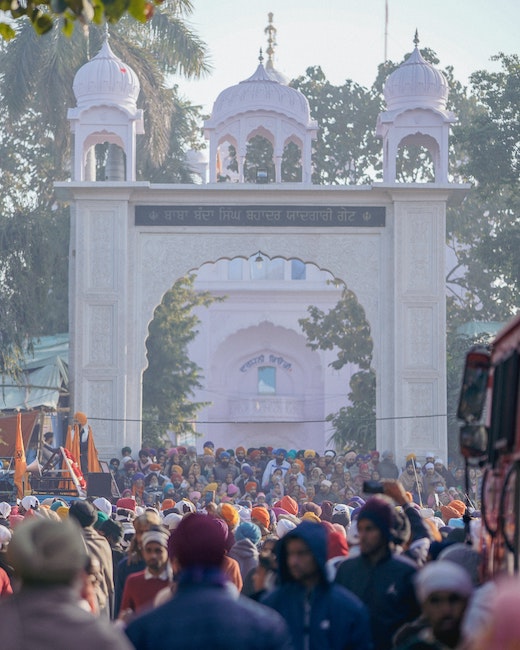
We will break down this statement and elaborate on it.
Sikh
This political model is based on Sikh Philosophy revealed by Guru Nanak (1469-1539), the founder of Sikh ReligionA Kingdom
The Highest Authority is of the King, the 'Eternal and Living' Sikh Guru, the Guru Granth Sahib, that takes the physical form of a 'Scripture'. This a metaphor that Sikhs put highest value to knowledge and the philosophy of their Guru.The word of the 'King' - the eternal Guru Granth Sahib has highest priority over all matters under his domain - both spiritual and temporal (worldly).
Direct democracy
Representative Democracy is a farce in most Nations and takes up precious resources while being tyrannical to minorities like the Sikhs.Most countries that claim to be democratic practice majoritarianism where the most easily misguided bottom 51% elect narcissitc dangerous fools that serve their corporate masters. Inflation, exploitation, and fascism follows from this satanic union of the Two Towers - the government (politicians and bureaucrats), and large corporations and oligarchs.
Hamid Dabashi, Professor of Iranian Studies and Comparative Literature at Columbia University, said: "All these states stage a ludicrous spectacle they call elections, then agitate the basest populist, nativist, or xenophobic fears and fantasies of the mobs they control and call the result democracy" - Source
Democracy is very expensive. "A precondition for an honest government is that candidates must not need large sums of money to get elected, or it must trigger off the cycle of corruption. The bane of most countries in Asia has been the high cost of elections. Having spent a lot to get elected, winners must recover their costs and also accumulate funds for the next election. The system is self-perpetuating. In Thailand, a former government minister described it as 'commercial democracy, the purchased mandate'." (Lee Kuan Yew, 'From Third World to First, The Singapore Story', p. 164).
"Plato argues that democracy is inferior to various forms of monarchy, aristocracy and even oligarchy on the grounds that democracy tends to undermine the expertise necessary to the proper governance of societies (Plato 1974, Book VI).
Most people do not have the kinds of intellectual talents that enable them to think well about the difficult issues that politics involves. But in order to win office or get a piece of legislation passed, politicians must appeal to these people's sense of what is right or not right. Hence, the state will be guided by very poorly worked out ideas that experts in manipulation and mass appeal use to help themselves win office" - Source .
Sikhs have their own traditional systems of decision making similar to direct democracy.
Based on traditional institutions of decision making
Sarbat Khalsa (ਸਰਬੱਤ ਦਾ ਭਲਾ) - All of Khalsa - is a gathering of all concerned Sikhs. All are invited. Those who are most affected by the agenda actively participate. All viewpoints are aired. There is no committee. Decisions are made by consensus and read out immediately.The advantage of this approach is that: it does not allow decisions to be made by distant authorities; it does not allow closed door decisions; it does not allow a majority to make decisions against the minority; and it does not allow truly bad decisions as people would revolt right there on the spot.
Five people(ਪੰਜ ਪਿਆਰੇ) are also chosen to implement the decisions. These are people who have the necessary knowledge, skills and experience to implement this. These are the meritocratic philosopher-kings that the public trusts to implement the decisions.
The advantage of this approach is that: the Chosen Five (ਪੰਜ ਪਿਆਰੇ) are chosen for their knowledge, skills and experience; people choose them and so people fully support them; they are chosen for the particular task, they do not hold any permanent positions. There is no concept of democracy electing entertaining clowns with limitless powers over all matters for years.
Epistocracy: governance by experts
Decisions that require expert knowledge and affect larger group of people are taken by experts in governance. This is what Plato calls Epistocracy: "Plato argues instead that the state should be ruled by philosopher-kings who have the wisdom and moral character required for good rule. He thus defends a version of what David Estlund calls 'epistocracy', a form of oligarchy that involves rule by experts (Estlund 2003)" - SourceKhalsa are the meritocratic experts in governance of the Sikhs. This is a 325 year old tradition that is still in active use. Khalsa are men trained in benevolence, governance, politics, economics and more.
***
"In his Farewell Address to Congress and an adoring American public, the great General and President George Washington uses the occasion to advise America on how to secure its future happiness and prosperity. Washington's prescient warnings come from his extensive knowledge of history. His wise and prophetic advice includes:"- Maintain religion and morality as supports of a free people.
- Beware of the formation of political parties.
- Avoid alliances & foreign military entanglements.
- Balance the Federal Budget and avoid state debt.
- Keep the government's spending and taxes low.
- Do not weaken the U.S. Constitution with amendments.
- Do not allow sectional differences to divide the Union.
***
The Tenth Sikh Guru, Guru Gobind Singh(1666-1708) was a Philosopher-King. He gave Sikhs PPT - People, Processes, and Tools - to ensure good governance in their Kingdom. People: Khalsa (Philosopher-Kings)
Processes: Sarbat Khalsa (ਸਰਬੱਤ ਦਾ ਭਲਾ) - all of Khalsa, Chosen Five (ਪੰਜ ਪਿਆਰੇ)
Tools: finest horses, swords made from Wootz Steel, weapons - all appropriate for that time
The zenith of this model was the Sikh Kingdom of Banda Singh Bahadur (1710-15) and Maharaja Ranjit Singh (1799-49). Both these kingdoms are known for providing good governance, prosperity, and freedom from government tyranny.
Partner with us
We are ready to partner with you to ensure your interests are met.We provide specialized and deep knowledge, advocacy, implementation partnership, and contacts for all activities in Punjab.
About
FURTHER READING

RELATED ARTICLES
REFERENCES
The end of the nation-state
Democracy
The Idea of Good Governance Brought in Practice by Maharaja Ranjit Singh : An Appraisal