Geopolitics
Geopolitical model for Punjab is Fusion of Civilizations.
15-Jul-2023
Fusion of Civilizations instead of Clash of Civilizations.
Good geopolitical relations with all.
Non-aggression.
No mass migration and tight border control.
Open to Tourism and Trade.
Good geopolitical relations with all.
Non-aggression.
No mass migration and tight border control.
Open to Tourism and Trade.
Good geopolitics relations with its neighbors have been a hallmark of Sikhs and the two Sikh Kingdoms.
A Sikh traveling into Islamic lands today gets affection and publicity usually reserved for modern celebrities. Throughout Islamic lands of Afghanistan and Pakistan, Sikh forts, Gurdwaras, and other physical structures were never destroyed. Many of them are neglected for lack of funds, but crucially, none of them were destroyed in anger or hate. It is testament to respect and admiration that Sikhs hold, in spite of Sikhs having ruled in the Islamic heartlands.
It is what Prof. Kishore Mahbubani calls 'Fusion of Civilizations'. It is a model of existence where cultures work with their similarities and work around their differences. It is the foundation for the ASEAN (Association of South East Asian Nations) which has ensured 50 years of peace and prosperity in Sourh East Asia.
This was also the model of the two Sikh Kingdoms from 1710-15 and 1799-1849 which were known for non-aggression. They had a powerful military that dominated South Asia while being known for their benevolence.
South Asia needs basic development to grow their economy and bring prosperity.
Tight control of borders will prevent mass migration but also allow tourism and trade.
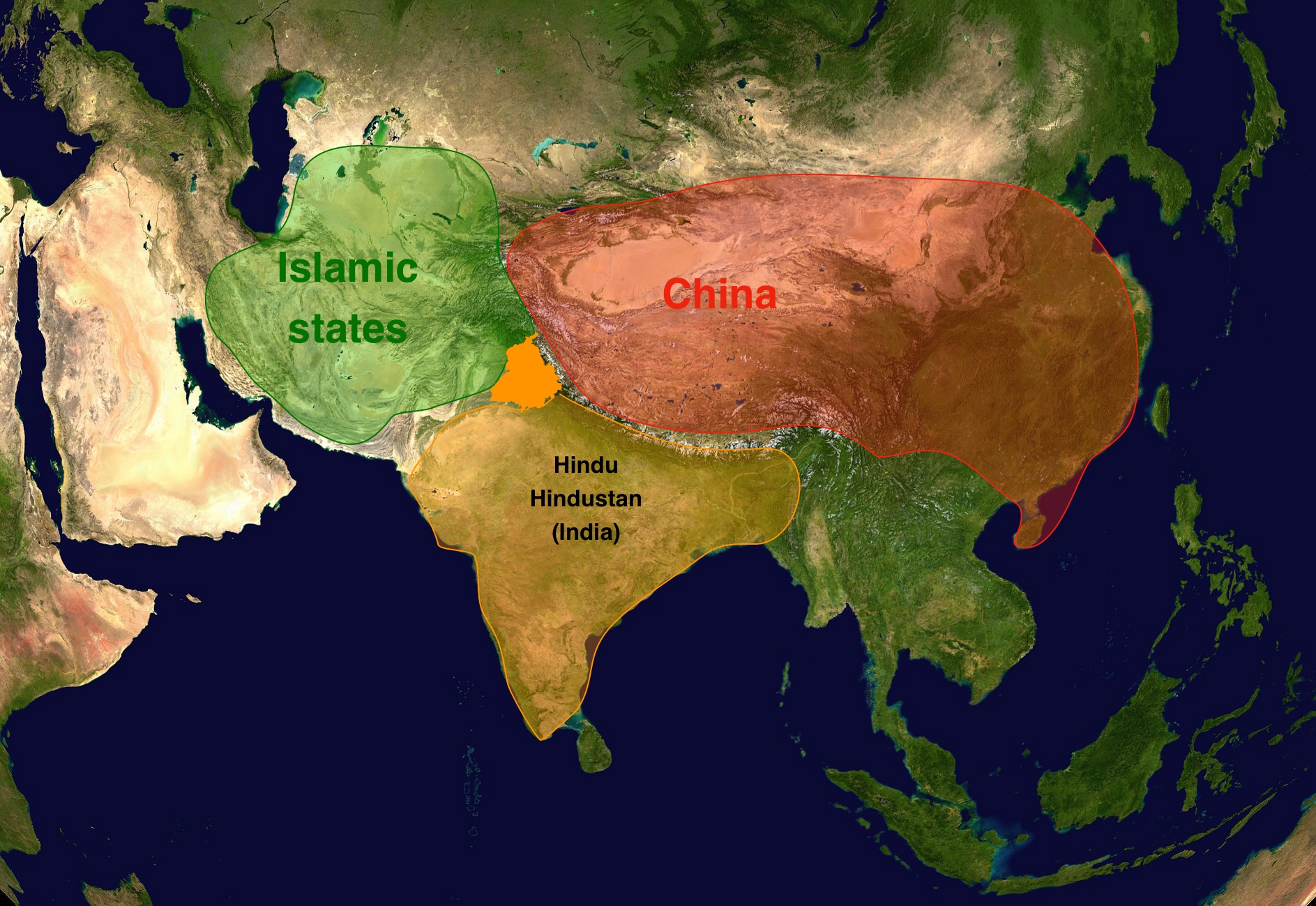
Punjab - the land of the Sikhs - is at the geopolitically critical confluence of Islamic heartlands, Hindu Hindustan (India), and China. Sikhs live where these three ideologically opposed nuclear powers meet. Yet Sikhs have excellent relations with all of them.
A Sikh traveling into Islamic lands today gets affection and publicity usually reserved for modern celebrities. Throughout Islamic lands of Afghanistan and Pakistan, Sikh forts, Gurdwaras, and other physical structures were never destroyed. Many of them are neglected for lack of funds, but crucially, none of them were destroyed in anger or hate. It is testament to respect and admiration that Sikhs hold, in spite of Sikhs having ruled in the Islamic heartlands.
It is what Prof. Kishore Mahbubani calls 'Fusion of Civilizations'. It is a model of existence where cultures work with their similarities and work around their differences. It is the foundation for the ASEAN (Association of South East Asian Nations) which has ensured 50 years of peace and prosperity in Sourh East Asia.
This was also the model of the two Sikh Kingdoms from 1710-15 and 1799-1849 which were known for non-aggression. They had a powerful military that dominated South Asia while being known for their benevolence.
South Asia needs basic development to grow their economy and bring prosperity.
Tight control of borders will prevent mass migration but also allow tourism and trade.
Punjab - the land of the Sikhs - is at the geopolitically critical confluence of Islamic heartlands, Hindu Hindustan (India), and China. Sikhs live where these three ideologically opposed nuclear powers meet. Yet Sikhs have excellent relations with all of them.
Partner with us
We are ready to partner with you to ensure your interests are met.We provide specialized and deep knowledge, advocacy, implementation partnership, and contacts for all activities related to Punjab.
About
RELATED ARTICLES
REFERENCES
Indus Valley Civilisation
The Fusion of Civilizations
Why the 21st century will be an Asian one - Kishore Mahbubani
FURTHER READING